Страница даты
11 мая 2026, Понедельник
Праздники, посты и события
Поста нет.
Для этой даты другие календарные события пока не найдены.
Жития и богослужебные тексты
Commemoration of the Founding of Constantinople
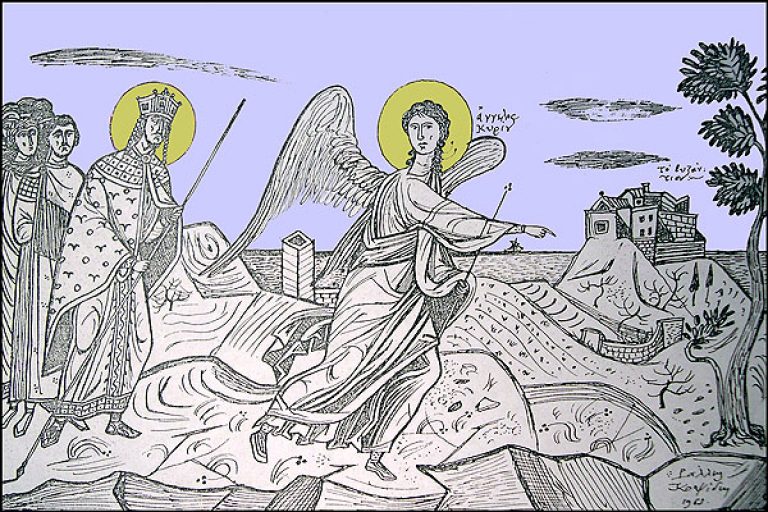
In 324 the holy Emperor Constantine (May 21) decided that the imperial capital had to be closer to the Eastern provinces, and yet have direct communication with the West. The city of Byzantium fulfilled these requirements, and on November 8, 324 the site of the new capital was consecrated. Tradition tells us that the Emperor was tracing the boundaries of the city with a spear, when his courtiers became astonished by the magnitude of the new dimensions of the capital. “Lord,” they asked, “how long will you keep going?” Constantine replied, “I shall keep going until the one who walks ahead of me stops.”
Hieromartyr Mocius the Presbyter of Amphipolis in Macedonia
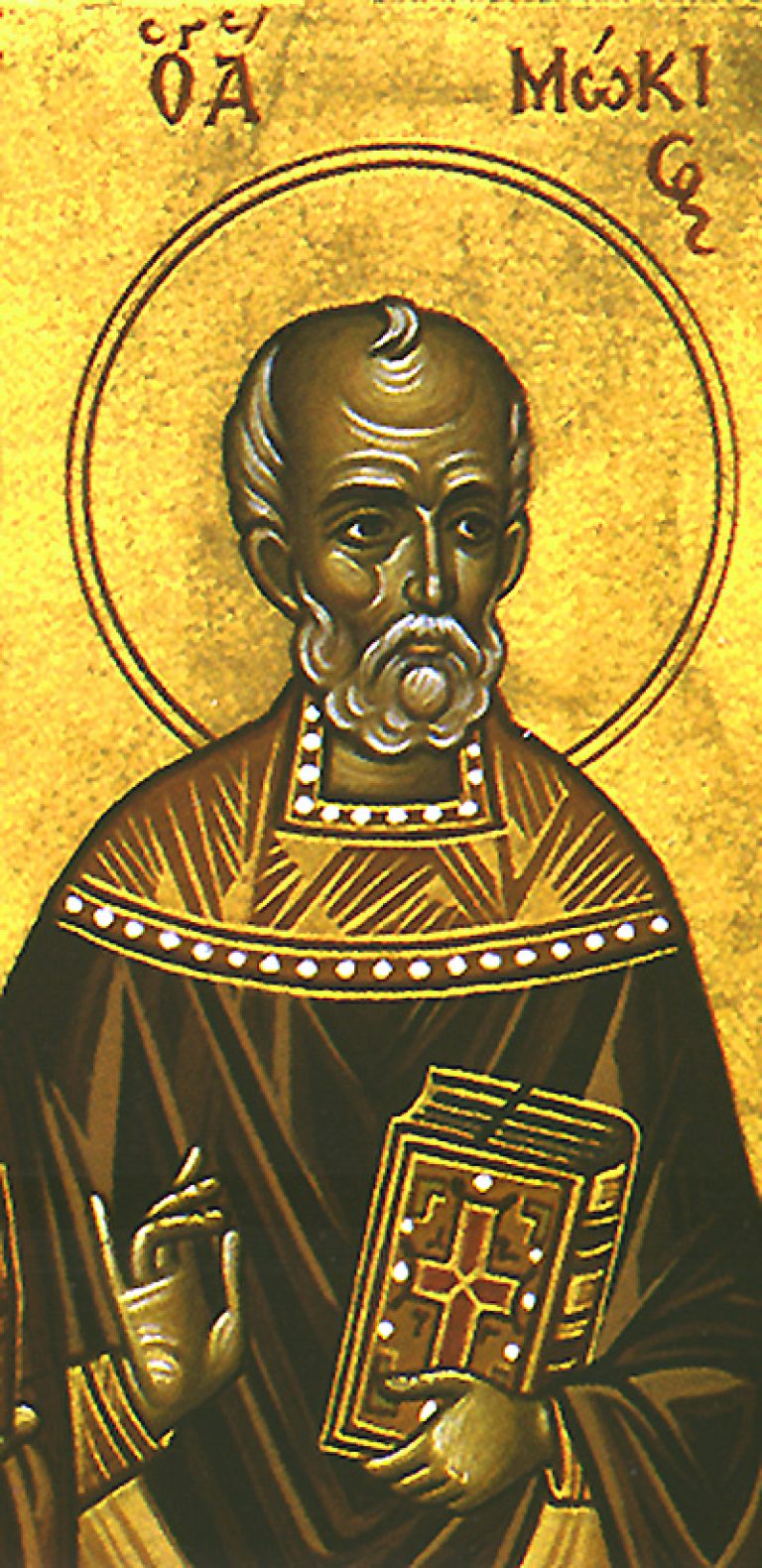
Saint Mocius was a presbyter in Macedonia in the city of Amphipolis. During a persecution against Christians under the emperor Diocletian (284-305), Saint Mocius exhorted the pagans who had assembled for the pagan festival of Dionysus (Bacchus), to abandon iniquity and the vile customs which accompanied this celebration. He urged them to repent and be converted to the Lord Jesus Christ, and be cleansed through holy Baptism. The saint was brought to trial before the governor of Laodicea. When threatened with torture, he replied, “My death for Christ is a great accomplishment for me.” Saint Mocius was subjected to torture, which he bore with marvelous endurance, and did not cease to denounce the idol-worshippers. Taken to the pagan temple of Dionysus, the saint shattered the idols when he called upon Jesus Christ. After this he was put into a red-hot oven, where he remained unharmed, but t...
Equals of the Apostles and Teachers of the Slavs, Cyril and Methodius
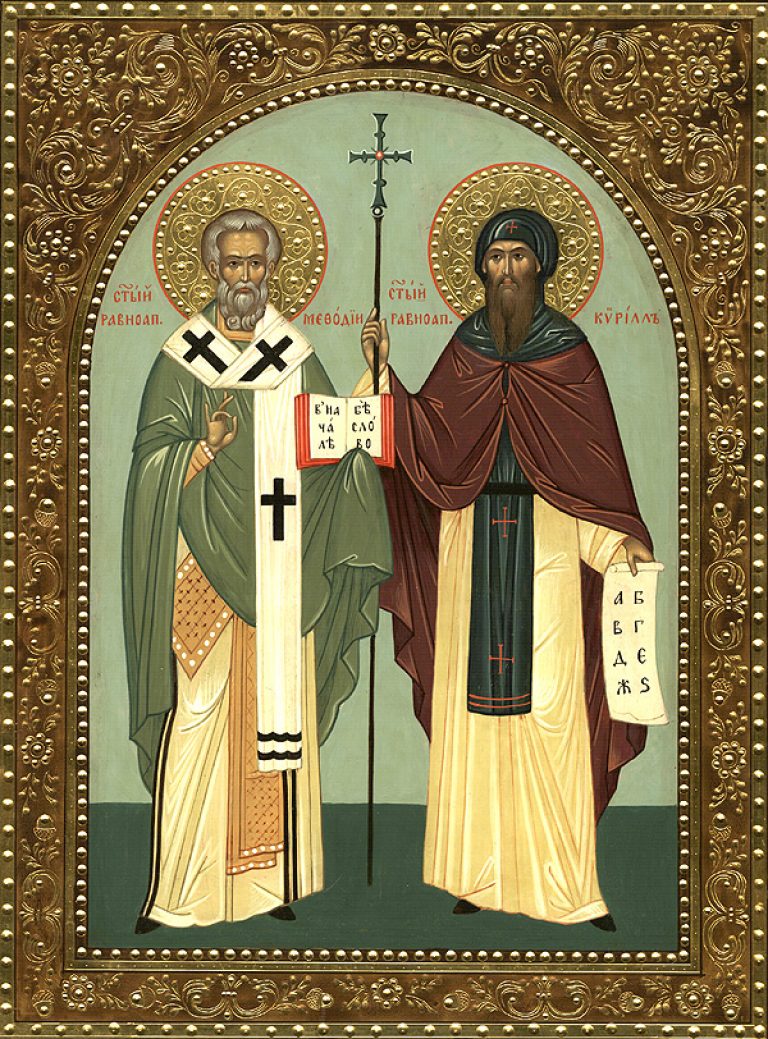
Saints Cyril and Methodius, Equals of the Apostles, and Enlighteners of the Slavs came from an illustrious and pious family living in the Greek city of Thessalonica. Saint Methodius was the oldest of seven brothers, Saint Constantine [Cyril was his monastic name] was the youngest. At first Saint Methodius was in the military and was governor in one of the Slavic principalities dependent on the Byzantine Empire, probably Bulgaria, which made it possible for him to learn the Slavic language. After living there for about ten years, Saint Methodius later received monastic tonsure at one of the monasteries on Mount Olympus (Asia Minor). Saint Constantine distinguished himself by his great aptitude, and he studied with the emperor Michael under the finest teachers in Constantinople, including Saint Photius, the future Patriarch of Constantinople (February 6). Saint Constantine studied all the...
Venerable Sophronius the Recluse of the Kiev Far Caves
The Relics of Saint Sophronius were buried in the Far Caves of the Kiev Caves monastery. In the Canon to the monks of the Far Caves the saint’s solitary ascetical struggles are mentioned. He was deemed worthy to hear angels singing. The memory of Saint Sophronius is also celebrated on March 11.
Saint Joseph, Metropolitan of Astrakhan
The Hieromartyr Joseph, First Metropolitan of Astrakhan, was born at Astrakhan in 1579. After becoming a monk, Saint Joseph was made Archimandrite of the Astrakhan Trinity monastery at the age of fifty-two. In 1656 he was at Moscow, after which he was chosen to be Metropolitan of Astrakhan. On May 11,1672, during an uprising of the townspeople, Saint Joseph suffered martyrdom at Astrakhan. This sad event was recorded in detail by two eyewitnesses, priests of the Astrakhan cathedral, Cyril and Peter. The priests took the body of the martyr, dressed it in bishop’s vestments, and placed it in a prepared grave. On the following day, after serving a Panikhida, the saint’s body was taken to a chapel, and it remained unburied for nine days. The relics of the holy hierarch were placed into the grave, and were soon glorified by miracles.
Saint Nikodemos, Archbishop of Serbia
Saint Nikodemos (Νikόdēmos) the Archbishop of Serbia, a gifted ecclesiastical writer and learned theologian, like many Serbian bishops, first contested on Holy Mount Athos where he was tonsured, and then he was chosen as Igoumen of Hilandar Monastery (1312–1316). The Hieromonk Gervasius wrote that the Saint was a native of "a western country, the land of Raska, called Serbia." After the death of the Serbian Archbishop Sava III, Saint Nikodemos was elected as Archbishop of All Serbia and the Land of Pomor, and ascended the primatial throne in 1317. The Hierarch translated the Rule of Saint Savva the Sanctified from Greek into Serbian. In the Synaxarion he included the dates of the repose of the Serbian rulers and Archbishops in order to commemorate the departed with festive services (if they were glorified as Saints). In his translation of the Jerusalem Typikon, Archbishop Nikodemos remin...
Saint Rostislav, Prince of Great Moravia
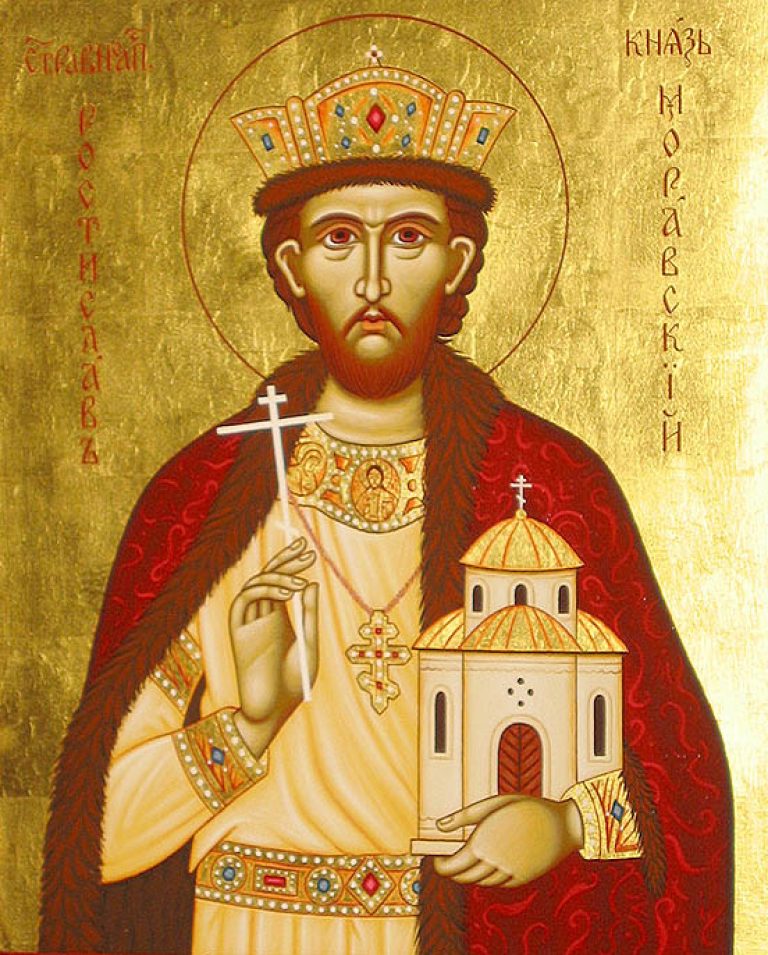
Saint Rostislav (Rastislav) the Prince of Great Moravia, and Equal of the Apostles, became Prince in 846, following the death of his uncle Mojmir I. At that time, missionaries from Greece, the Balkans, and Germany were already preaching in the territory of Great Moravia. Prince Rostislav was among those who received Holy Baptism, and soon afterward he decided to enlighten the entire country with the light of the Christian Faith. Wary of the German missionaries, who were subject to Louis the German, the King of East Francia, Prince Rostislav understood that for the preaching of the Gospel to be successful, it must be proclaimed in the language of the people. At first, Rostislav asked the Roman Pope Nicholas I to send him some missionaries who knew the Slavic language. When his request was refused, he turned to the Byzantine Emperor Michael III. On the advice of Patriarch Photios of Consta...
New Martyr Dioscorus
No information available at this time.
New Martyr Argyrus
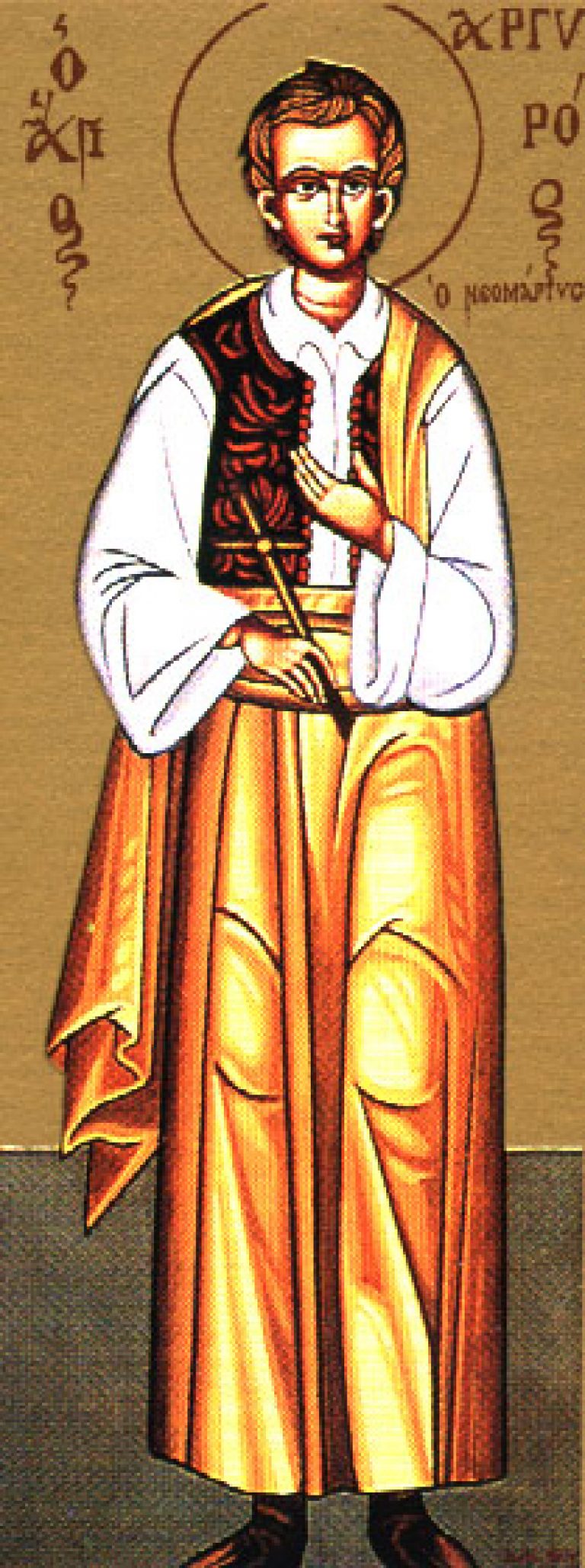
No information available at this time.
Blessed Christopher, called Christesia
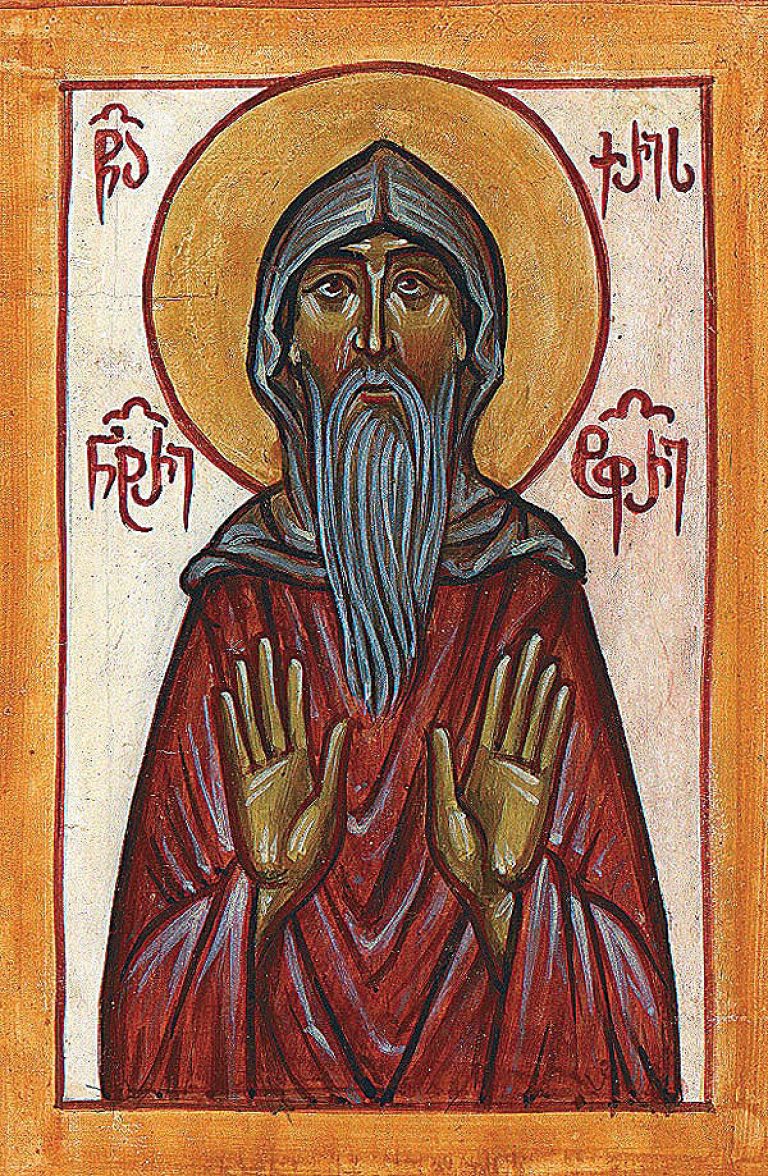
Blessed Christesia’s family was from Egrisi in western Georgia. From his youth Christesia longed for the divine services and the solitary life, but he was forced by his master to marry, and by this marriage he begot a son. Later, when both his wife and son had died, his master insisted that he marry again, but the pious Christesia would not heed his master’s order. Instead he related the order to his spiritual father, who advised him to depart from the world and journey to the Davit-Gareji Wilderness. Deeply inspired by his spiritual father’s counsel, Christesia abandoned his possessions and his life in the world and withdrew to the Monastery of Saint John the Baptist in the Davit-Gareji Wilderness. The holy father spent many years in humble service to the Lord. He was assigned to gather firewood and bring water for the monastery, and he performed these tasks obediently and in perfect me...
Holy Monastic Martyrs Olympia and Euphrosynē
Saint Olympia (Ολυμπία) was born to devout parents who were from Constantinople. Her father was a priest, and her mother was the daughter of a priest. They fled Constantinople for some unknown reason and went to the Peloponnesos. At the age of ten, Saint Olympia lost her parents, and her relatives sent her to Karyes Monastery at Therme on the island of Lesbos, where her aunt Dorothy was the Igoumeness. Originally this was a womens' monastery, but today it is Saint Raphael's Monastery. At the age of nineteen, Saint Olympia was tonsured as a nun. When she was twenty-five, she succeeded her aunt as Igoumeness. About ten years later, on May 11, 1235, pirates arrived on Lesbos and went to the monastery where there were thirty nuns. Some of them were raped by the pirates, but others fled to the mountains. Igoumeness Olympia and Eldress Euphrosynē (Ευφροσύνη) were subjected to frightful torment...
Feasts & Saints
GOARCH Digital Chant Stand services: 2026-05-11
Calendar index day: 11-Monday
Saints Cyril and Methodius
Official Saints category of the Greek Orthodox Patriarchate of Antioch and All the East.