Date page
19 May 2026, Tuesday
Feasts, fasts and events
No fast.
No other calendar events have been found for this date yet.
Lives and liturgical texts
Hieromartyr Patrick, Bishop of Prusa, and his companions

Saint Patrick lived during the first century and was bishop of the city of Prusa in Bythnia (Asia Minor). He openly and boldly preached Christ the Savior, and denounced the error of the pagans. Therefore, he and the priests, Acacius, Menander and Polyainus were arrested, and brought to Julius, the prefect of the city for interrogation. Julius was going to the hot springs for treatment, and he ordered that the Christian bishop and the priests be brought along after him, bound in iron chains. After he washed in the hot springs, Julius offered sacrifice to his gods. He had Saint Patrick and the other prisoners brought before him, ordering them to offer sacrifice to the pagan gods, threatening punishment if they refused. Saint Patrick replied, “I am a Christian and I worship the one true God, Jesus Christ, Who has created the heavens and the earth, and these warm springs for the benefit of a...
Venerable Cornelius, Abbot of Komel, Vologda
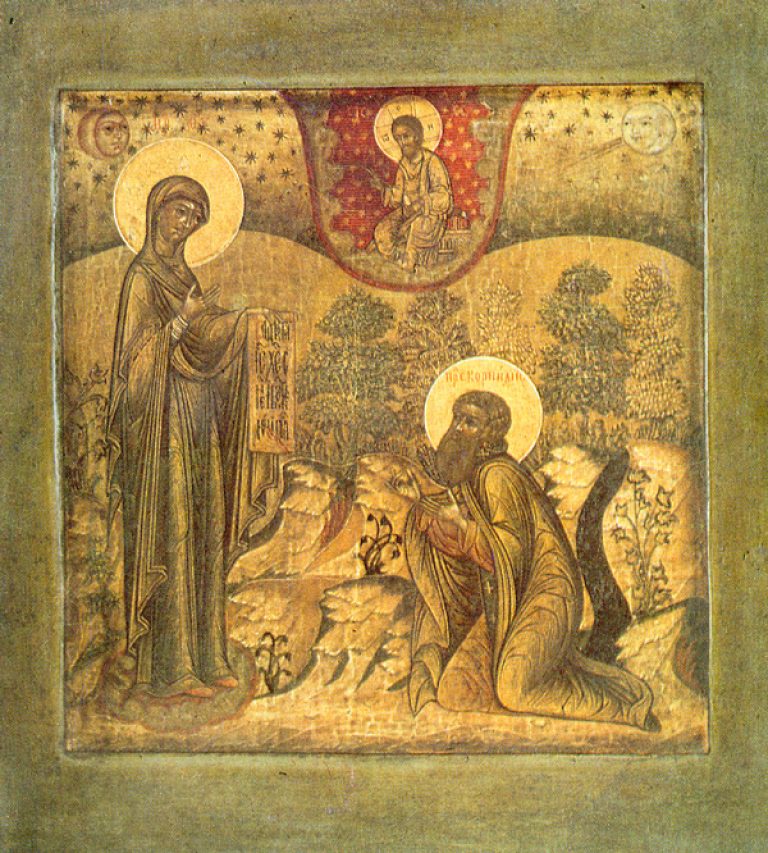
Saint Cornelius of Komel was descended from the boyar (noble) family Kriukov. His brother Lukian served at the court of the Great Prince of Moscow. When Lukian, who was getting old, decided to go to the monastery of Saint Cyril of White Lake, he was followed by Cornelius, who longed for the solitary life from a young age. After he was tonsured, the young Cornelius began his monastic endeavors with a difficult obedience: he wore heavy chains in the bakery. In his spare time he occupied himself with copying church books. Because of his love for solitude, Saint Cornelius later left the White Lake monastery, and he visited Rostov. At Novgorod, Saint Gennadius (December 4) attempted to hold on to him, but the ascetic settled in a desolate spot near Novgorod. When people began to visit here also, he moved to the Tver Sabbatiev wilderness monastery. Later, in 1497, he settled in the Komel fores...
Venerable Cornelius, Abbot of Paleostrov
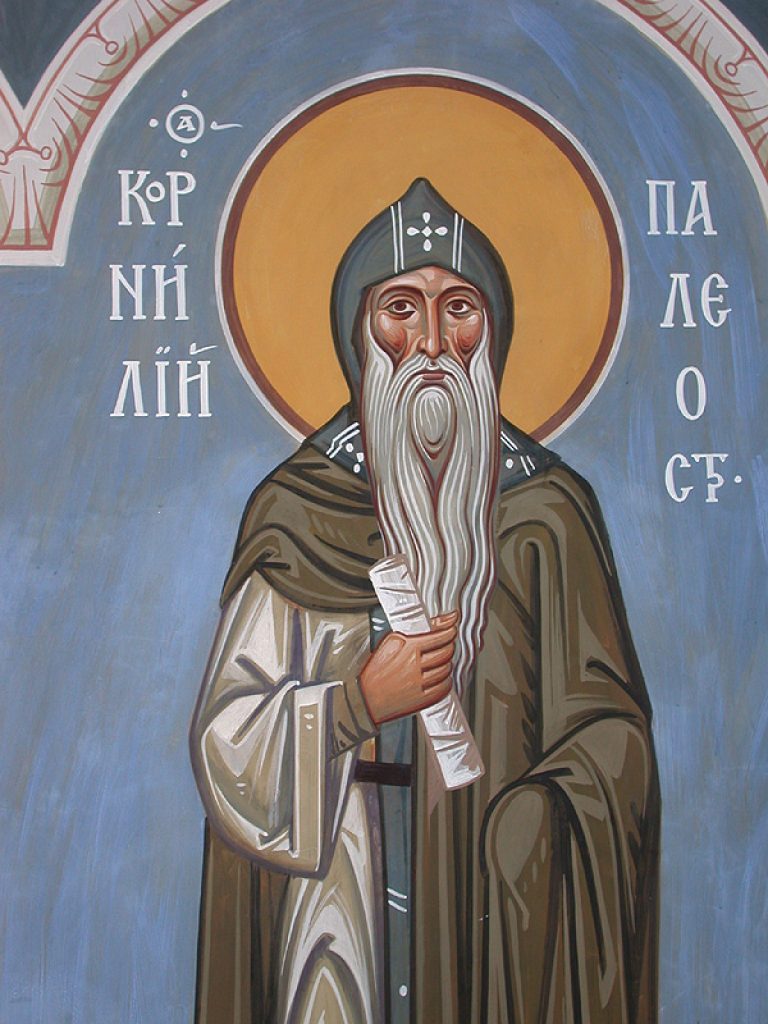
Saint Cornelius of Paleostrov and Olonets, born at Pskov, was the founder of monastic life on Pali island in Lake Onega at the end of the fourteenth century. Despite the desolation of the island, brethren soon gathered near him. He built for them a church in honor of the Nativity of the Most Holy Theotokos, and a trapeza church in honor of the holy Prophet Elias. The saint spent the final years of his life in a cave half a verst from the monastery, in unceasing prayer. The ascetic added the wearing of heavy chains to his struggles. The saint’s blessed repose occurred around the year 1420. His relics were transferred to the monastery church by his disciple, Saint Abramius of Paleostrov (August 21), who was also glorified by his ascetical life, and was buried in the Paleostrov monastery beside his Elder.
Right-believing John, Prince of Uglich, tonsured as Ignatius
The holy Prince John of Uglich was a devout and God-fearing Christian from his youth. He and his brother Demetrius were thrown into prison by their uncle John, and remained there for thirty-two years. Before his death, Prince John received monastic tonsure with the name Ignatius. He was known as a wonderworker.
Venerable Sergius of Shukhtom
Saint Sergius (Stephen, in the world) was a Schema-monk of Shukhtom (or Shukhtov) Monastery, located in the village of Shukhtom 50 km from the city of Cherepovets. His Holy Relics were buried under the floor of the monastery church, which later became the Protection parish church when the monastery was abolished. Some information about the devout and ascetical life of Saint Sergius is given in a lengthy inscription on his tomb. It states that on May 19, 1609, the Feast of the Holy Martyr Patrick, the Bishop of Prussia, the servant of God, Schema-monk Sergius, reposed during the reign of Tsar Basil IV Shuisky, when His Holiness Ermogen (February 17 and May 12) was Patriarch of Moscow. The labor-loving body of Saint Sergius was buried in the chapel of the church of the Life-creating Trinity and the Protection of the Theotokos at Shukhtom, in the region of White Lake. The Saint was born and...
Saint John, Bishop of the Goths in the Crimea
Saint John, Bishop of the Goths, lived during the eighth century. The future saint was born in answer to the fervent prayer of his parents. From an early age, he lived a life of asceticism. The saint made a pilgrimage to Jerusalem, and spent three years visiting all the holy places. Then he returned to his native country. At that time the emperor Constantine Copronymos the Iconoclast (741-775) banished the Gothic bishop, and the Goths fervently entreated Saint John to become their bishop. Saint John went to Georgia, which was isolated from the Iconoclast heresy. There he was ordained. Upon his return to the Goths he was soon compelled to depart from them. Hidden away from the pursuing Khazars, he settled at Amastridia, where he dwelt for four years.
Right-believing Demetrios Donskoy, Grand Prince of Moscow
The right-believing Great Prince Demetrios of Moscow was born in 1350. His father died when Demetrios was just a young child, and so he was entrusted to the guidance of Saint Alexis of Moscow (February 12). The holy Prince Demetrios combined Christian piety with his remarkable political talents, devoting himself to the unification of the land of Russia and to the emancipation of Russia from the Tatar-Mongol Yoke. On August 18, 1380, after gathering his forces for a decisive battle with Mamai of the Golden Horde, Saint Demetrios visited Saint Sergius of Radonezh (September 25) in order to receive his blessing. The Elder blessed two monks from his monastery, Schema-monk Andrew [Oslyaba] and Schema-monk Alexander [Peresvet], to go along and help the Prince. He also predicted that Saint Demetrios would be victorious. The Prince left Moscow with his army on August 20, and marched toward Kolom...
Martyr Caluf of Egypt
The Holy Martyr Caluf the Egyptian lived during the third century, and was from the city of Thebes. For his confession of faith in Christ he was arrested and taken before the prefect of the city. He was suspended head downward, and received a cruel beating. The sufferer repeated, “I endure everything in expectation of the future life.” They then untied him and urged him to offer sacrifice to idols, but the saint did not consent. Finally, he was thrown into a fire and surrendered his soul to God. This occurred in the year 303. The holy martyr Caluf suffered during the persecution by the emperor Maximian Hercules, who ruled jointly with Diocletian (284-305).
Entrance of Saint Nino (Nina) the Enlightener into Georgia
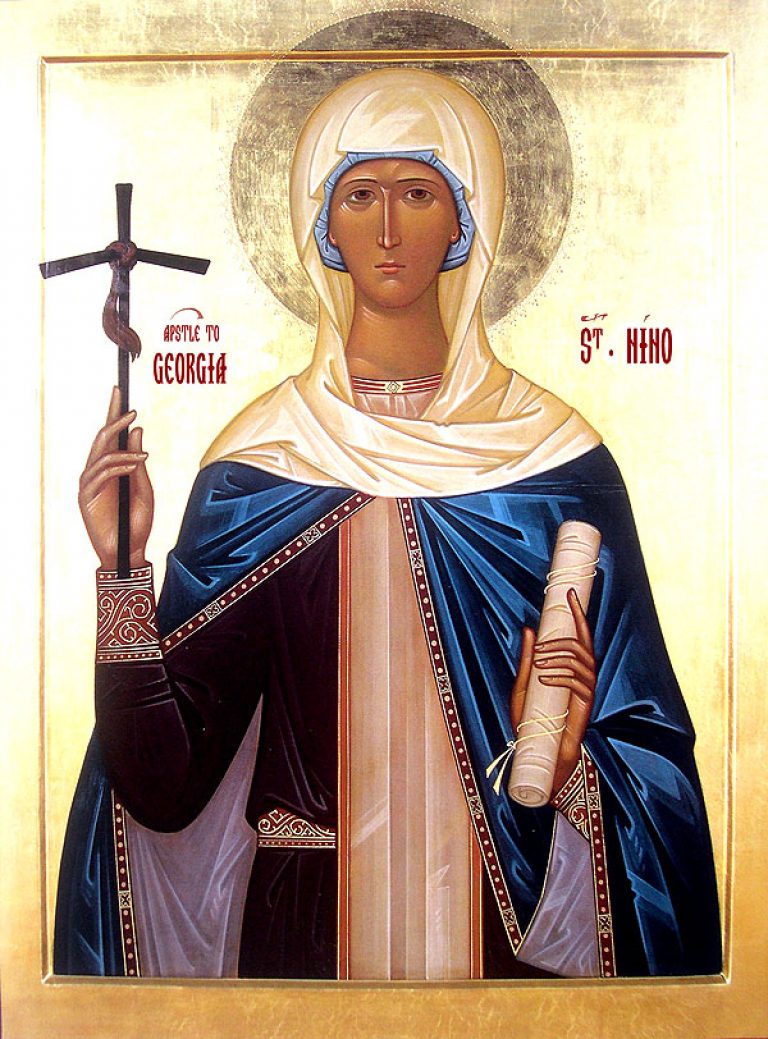
The holy Apostles Andrew the First-called and Simon the Canaanite first preached the Christian Faith in Georgia in the 1st century, but at the beginning of the 4th century most of the country was still pagan. After the Theotokos revealed God’s will for her future, the Equal-to-the-Apostles Nino set off for Georgia to enlighten the Iberian people. She arrived in Armenia with the holy martyrs and virgins Rhipsimia, Gaiana and their fifty companions. The holy virgins were martyred in Armenia and, according to God’s will, Saint Nino journeyed on alone to Lake Paravani, entering Georgia from the Javakheti Mountains. She arrived in the spring, but the weather was unseasonably cold. The Apostolic Church of Georgia has honored the Entrance of the holy Equal-to-the-Apostles Nino as a major feast day. The Church also commemorates her on January 14, the day of her repose.
Martyr Theotime
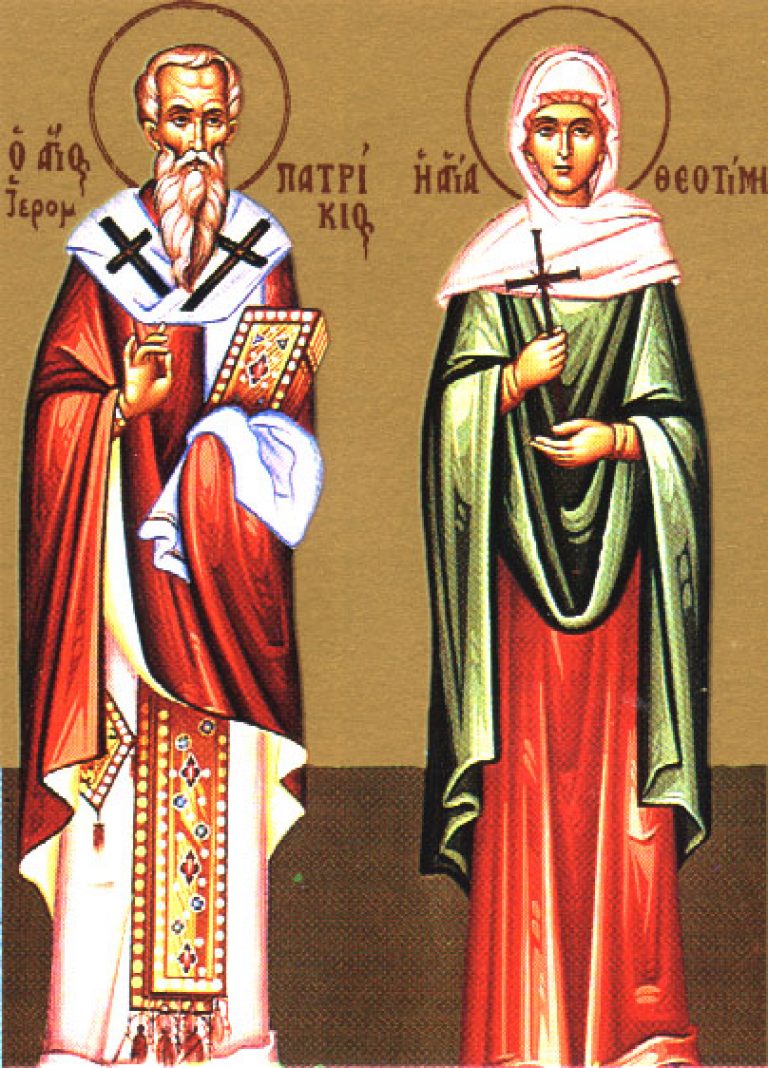
There is very little information about Saint Theotime (Θεοτίμη) except that she was beheaded ca. 311, thereby receiving an incorruptible crown from Christ.
Feasts & Saints
GOARCH Digital Chant Stand services: 2026-05-19
Calendar index day: 19-Tuesday